


The Narrative vs. the Numbers
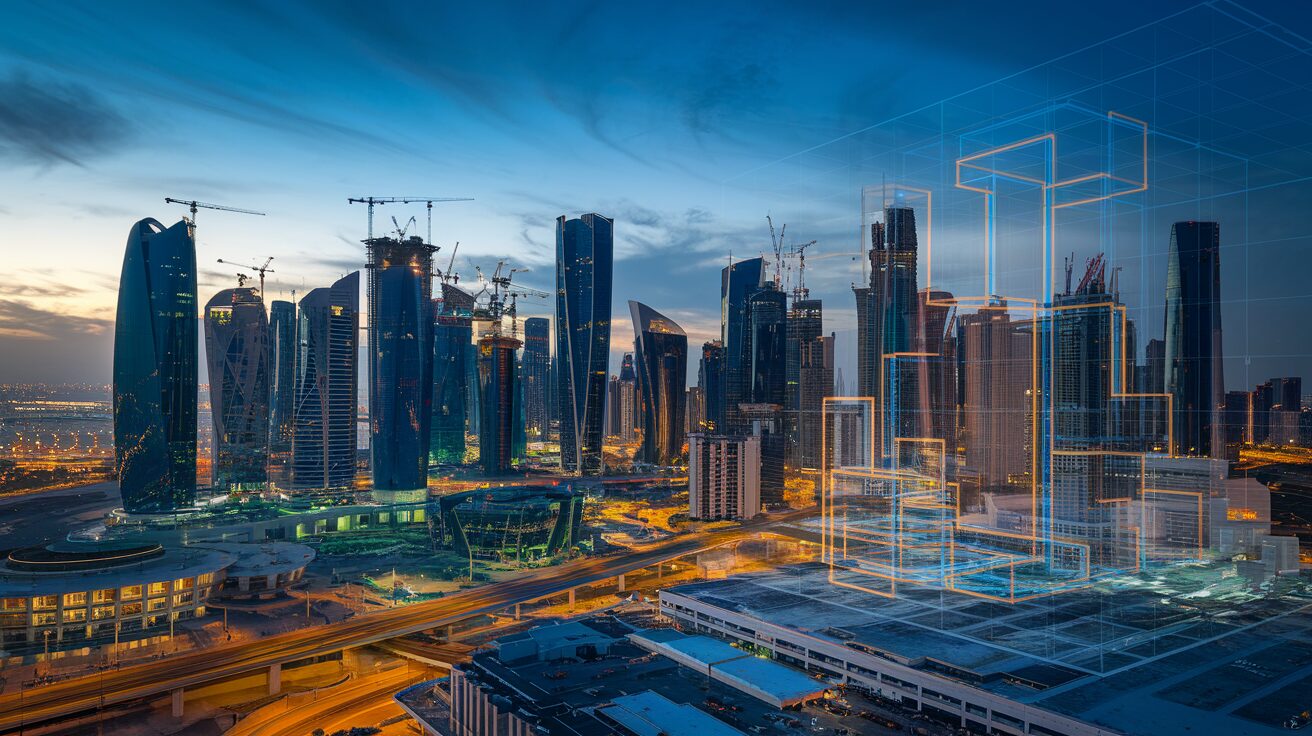
There’s a narrative floating around that GCC construction has peaked. That the post-World Cup hangover hit Qatar hard, that Saudi mega-projects are stalling, and that the region’s building boom is running out of steam.
The data says otherwise.
Qatar’s construction market is projected to reach QAR 133.55 billion in 2026, growing 4.4% year-on-year. The country’s Third National Development Strategy has earmarked USD 85 billion in infrastructure spending through 2030. In February 2026 alone, Ashghal awarded 20 new infrastructure projects worth approximately QR 11.5 billion.
That’s not a slowdown. That’s sustained, deliberate acceleration.
What’s Actually Driving Construction Across the GCC Right Now
The narrative of a slowdown usually cherry-picks one headline. The reality is more layered.
In Qatar, the growth engine has shifted from event-driven construction (World Cup stadiums, hospitality) to long-cycle infrastructure. Roads, drainage systems, hospitals, data centers, LNG processing facilities. QatarEnergy’s North Field expansion alone represents over USD 50 billion in investment, pushing LNG production from 77 mtpa to 142 mtpa by 2030. MEEZA’s sixth data center is a USD 250 million build designed for hyperscale AI and cloud workloads.
In Saudi Arabia, the picture is more nuanced. Some giga-projects have been restructured and phased. The Line’s initial segment is focused on 2.4 kilometers with 50,000+ workers on site. But the broader Vision 2030 ecosystem keeps expanding. Red Sea Global’s Phase 1 is operational. KAFD is occupied by major financial tenants. ROSHN has delivered thousands of residential units. These aren’t renderings anymore. They’re built, occupied, and generating demand for the next phase.
Across the UAE, BIM mandates for public projects have moved from recommendation to requirement. Kuwait’s government is accelerating digital transformation across its construction sector.
The common thread: every one of these markets is building at scale, and every one of them needs coordinated, compliant, execution-ready BIM to do it.
Why BIM Demand Specifically Is Accelerating
Here’s what most market analyses miss. Construction volume alone doesn’t drive BIM demand. Three things do.
Complexity. As projects get more technically complex (mixed-use towers, LNG facilities, AI-ready data centers, healthcare campuses), the coordination burden increases exponentially. A hospital with 14 MEP systems cannot be coordinated on 2D drawings. It requires federated BIM models, systematic clash detection, and multi-discipline coordination. The projects being built in the GCC right now are among the most complex in the world.
Compliance pressure. ISO 19650 adoption is spreading across the region. Saudi Arabia now mandates BIM for government implementation across giga-projects. Qatar’s Ashghal requirements have tightened. The UAE’s public sector expects BIM-based deliverables. This isn’t optional anymore. If your BIM process can’t demonstrate standards compliance, you’re not on the shortlist.
Lifecycle thinking. The conversation has shifted from “build it” to “operate it.” Qatar’s investment in digital twins, AI-integrated BIM models, and facility management-ready deliverables signals a fundamental change in what clients expect from their BIM partners. The model doesn’t end at handover. It needs to serve the building for 30 years.
| Narrative | Reality (2026 Data) |
|---|---|
| “Qatar construction peaked after the World Cup” | QAR 133.55B market, 4.4% YoY growth, USD 85B infrastructure pipeline through 2030 |
| “Saudi mega-projects are stalling” | Red Sea Global Phase 1 operational, KAFD occupied, ROSHN delivering units, 50,000+ workers on The Line |
| “BIM is a nice-to-have” | UAE mandates BIM for public projects, KSA mandates for giga-projects, Ashghal tightening requirements |
| “The market will correct itself” | Long-cycle infrastructure (LNG, hospitals, data centers) replacing event-driven construction |
The Staffing Reality No One Talks About
Here’s the tension. GCC construction is growing. BIM demand is accelerating. But the talent pool hasn’t kept pace.
Finding qualified BIM coordinators and managers who understand ISO 19650 workflows, can navigate Ashghal standards, and have actual mega-project experience is getting harder. The firms that can scale BIM teams quickly, without sacrificing quality or process discipline, have a significant operational advantage.
This is where the outsourcing model is shifting too. It’s no longer about cost arbitrage. It’s about access to qualified, process-certified professionals who can mobilize fast and integrate into existing project workflows without a six-month onboarding curve. BIM staffing that works at the speed these projects demand requires a different operating model.
What This Means for Project Teams Making Decisions Right Now
If you’re a project director, developer, or firm owner evaluating BIM partnerships in 2026, the market conditions are clear.
The pipeline is real. Qatar alone has QR 11.5 billion in freshly tendered infrastructure work from a single month. Saudi Arabia’s operational giga-projects need ongoing BIM support for expansion phases. UAE mandates are pulling more projects into BIM-first workflows.
The standards bar is rising. ISO 19650 compliance isn’t a differentiator anymore. It’s table stakes. Clients are asking not just “do you do BIM?” but “can you prove your process is certified, auditable, and scalable?”
The window for half-measures is closing. Teams that rely on ad hoc BIM coordination, inconsistent LOD standards, or disconnected models across disciplines are hitting walls on projects that demand better. The complexity of what’s being built in the GCC no longer tolerates it.
BIM DESIGN LLC: Operating at Full Capacity
We’re seeing this firsthand. Our project pipeline hasn’t slowed. It’s diversified.
We’re actively delivering BIM services across hospitality, infrastructure, institutional, and mixed-use projects in Qatar and Saudi Arabia. Our team is fully mobilized. Production is running. New projects are in onboarding.
What we’ve built operationally, Qatar-based coordination with India-based production, gives us the ability to scale teams up or down without disrupting live projects. That’s not a pitch. It’s how we delivered BIM for the Lusail F1 Circuit, Panda Zoo, Msheireb Bus Station, and Capella Hotel. It’s how we’re delivering right now.
ISO 19650 certified. ISO 9001 certified. ISO 45001 certified. Execution-ready.
The GCC construction market isn’t winding down. It’s evolving into something more demanding, more complex, and more reliant on BIM done right.
Frequently Asked Questions
Yes. Qatar’s construction market alone is projected to reach QAR 133.55 billion in 2026, representing 4.4% year-on-year growth. Across the broader GCC, sustained infrastructure investment, LNG expansion projects, and Vision 2030 initiatives in Saudi Arabia continue driving construction activity. The growth has shifted from event-driven projects to long-cycle infrastructure, which creates more sustained demand.
Several Saudi giga-projects have been restructured or phased, but construction continues. The Line has 50,000+ workers on a 2.4-kilometer initial segment. Red Sea Global’s Phase 1 is operational with hotels open to guests. KAFD is occupied by major financial tenants. ROSHN has delivered thousands of residential units. The projects are being built in phases, which actually extends BIM demand over a longer timeline.
Three factors are driving BIM demand: increasing project complexity (hospitals, data centers, mixed-use mega-developments), tightening compliance requirements (ISO 19650 mandates, Ashghal standards, UAE public-sector BIM requirements), and a shift toward lifecycle thinking where clients expect BIM models to serve facility management for decades after construction.
ISO 19650 is increasingly expected, particularly for government and public-sector projects. Saudi Arabia mandates BIM adoption for giga-project implementation. Qatar’s Ashghal has tightened BIM deliverable requirements. While not universally mandated by law across all project types, ISO 19650 certification is becoming a baseline qualification for BIM service providers competing for major contracts.
The current demand is led by infrastructure (roads, drainage, utilities via Ashghal’s ongoing program), energy (QatarEnergy’s North Field LNG expansion), healthcare, education, data centers (MEEZA’s sixth facility), and continued hospitality and mixed-use development. This diversification means BIM service providers need multidisciplinary capability across architectural, structural, MEP, infrastructure, and landscape disciplines.
Conclusion
The GCC construction market in 2026 isn’t contracting. It’s shifting from event-driven building into long-cycle infrastructure, energy, and urban development. That shift demands more from BIM, not less. The projects are more complex, the compliance requirements are tighter, and the expectation of lifecycle-ready deliverables is now standard.
For project teams and decision-makers, the question isn’t whether to invest in BIM. It’s whether your BIM partner can keep pace with what the market now requires.