
BIM IMPLEMENTATION
We deliver BIM implementation services tailored to organizational needs. This includes process assessments, developing BIM strategies, creating standards, and training staff. Our implementation aligns with industry standards and best practices to ensure successful BIM adoption.
We help organizations transition to BIM by streamlining workflows, training teams, and aligning processes with business goals. Our hands-on approach ensures cultural alignment, smoother adoption, and consistency in project delivery.
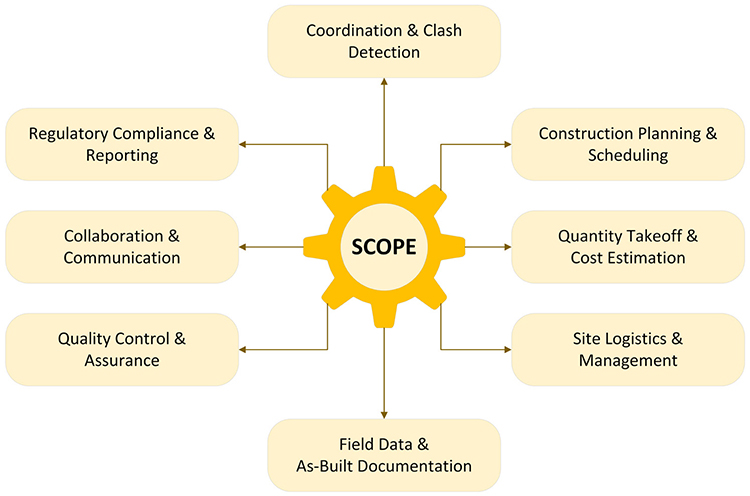
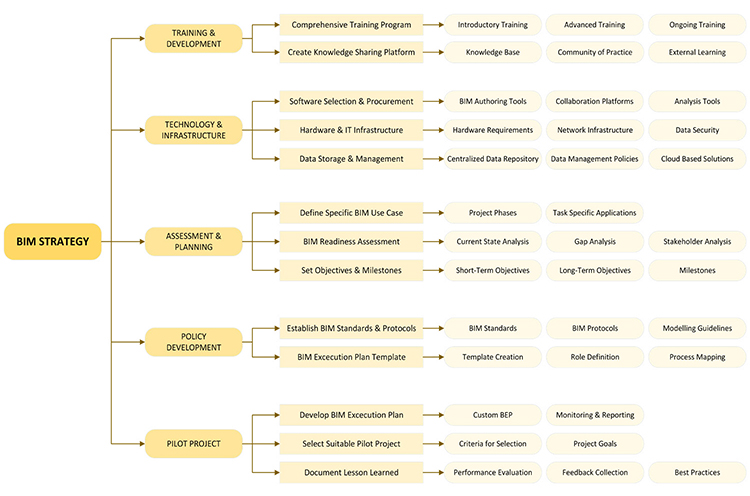
Our BIM Implementation Workflow
Assessment of Current Processes and Resources
- Conduct a thorough evaluation of the organization’s existing workflows, technologies, and personnel capabilities to identify gaps and opportunities for BIM adoption.
- Analyze the readiness of the organization to transition to BIM-based processes and provide a roadmap for gradual implementation.
BIM Strategy Development
- Develop a customized BIM strategy that aligns with the organization’s long-term goals and industry-specific requirements.
- Define key performance indicators (KPIs) to measure the success of BIM implementation.
Creation of BIM Standards and Protocols
- Set up project-specific BIM standards, including naming conventions, file structures, and modeling protocols and collaboration processes.
- Define LOD (Level of Development) specifications and model content matrix to ensure consistency across all project models.
- Ensure compliance with ISO 19650 standards for managing BIM information through project phases.
Technology Selection and Integration
- Assess software requirements: Based on project needs, recommend the most suitable BIM tools for design, modeling, and collaboration (e.g., Revit, Navisworks, BIM 360, Autodesk Construction Cloud).
- Provide recommendations for interoperability between different software platforms, ensuring smooth data exchange and coordination.
- Set up the necessary software and integrate the BIM tools with existing workflows, ensuring the team can efficiently use the chosen tools.
Training and Skill Development
- Provide comprehensive training programs for staff, covering BIM processes, tools (e.g., Revit, Navisworks), and collaboration techniques.
- Deliver role-specific training to empower teams, including architects, engineers, project managers, and facility managers.
BIM Implementation Support
- Offer hands-on support during the transition period, including troubleshooting, process optimization, and handholding for project teams.
- Conduct regular BIM audits and evaluations to ensure compliance with established standards and protocols.
Change Management and Stakeholder Engagement
- Manage cultural and organizational changes required for successful BIM adoption, ensuring buy-in from all stakeholders.
- Facilitate workshops and meetings to align internal teams and external partners with the organization’s BIM vision.
Long-Term Support and Monitoring
- Provide ongoing support to monitor BIM adoption, assess performance, and recommend improvements.
- Stay updated with the latest BIM advancements and help organizations remain competitive in the market.
Benefits to BIM IMPLEMENTATION
- Increases efficiency across all project phases.
- Standardizes processes and workflows for consistency.
- Enhances team collaboration and communication.
- Positions organizations as leaders in BIM-enabled construction.
- Reduces project risks and improves outcomes.
- Supports long-term digital transformation strategies.
- Maximizes ROI on BIM investments.

Get in Touch With a Member of Our Team Today