
Across the Middle East, governments and developers are investing billions in preserving cultural heritage sites while integrating them into modern urban landscapes. Building Information Modeling (BIM) and Scan-to-BIM technologies are playing a central role in making this possible — capturing the past in millimeter-accurate digital form and enabling architects and engineers to plan restorations without risking the original structure.
Why Heritage Projects Need BIM
Traditional restoration methods rely on manual surveys, hand-drawn documentation, and on-site measurements — processes that are slow, prone to error, and can risk physical damage to fragile structures. BIM changes this equation entirely.
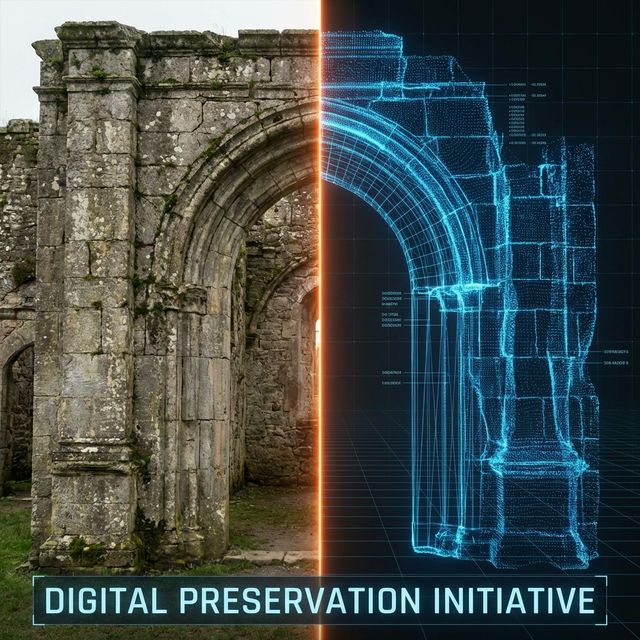
With 3D laser scanning (LiDAR), heritage buildings can be captured as dense point clouds — billions of spatial data points — that form a precise digital replica of the structure. This point cloud is then converted into a fully parametric BIM model, a process known as Scan-to-BIM. The resulting model allows architects, structural engineers, and conservation specialists to study every detail of a building without being physically present.
The Scan-to-BIM Workflow for Heritage
The Scan-to-BIM process for heritage structures typically follows a structured workflow:
- Site Survey and Data Capture: Laser scanners are deployed across the site, often from multiple positions to ensure complete coverage. The equipment captures geometry, textures, and spatial relationships with sub-millimeter accuracy.
- Point Cloud Registration: Individual scans from different positions are aligned and merged into a single, unified point cloud dataset. This step ensures that the full building envelope is represented accurately.
- 3D BIM Model Creation: Skilled BIM technicians trace over the point cloud data to build an intelligent 3D model in software like Autodesk Revit. Each element — walls, arches, columns, ornamental details — becomes a data-rich object, not just a visual shape.
- Analysis and Documentation: The resulting MEP, structural, and architectural models are used to assess condition, plan interventions, generate construction documents, and simulate future modifications.
Benefits for Conservation Projects
Non-Invasive Documentation
Laser scanning captures the full geometry of a heritage structure without physical contact, preserving fragile surfaces, finishes, and historical materials during the documentation process.
Accurate Baseline Records
The resulting BIM model serves as an accurate, permanent digital record of the building’s current condition — critical for tracking changes, planning maintenance, and guiding future restoration efforts.
Multi-Disciplinary Collaboration
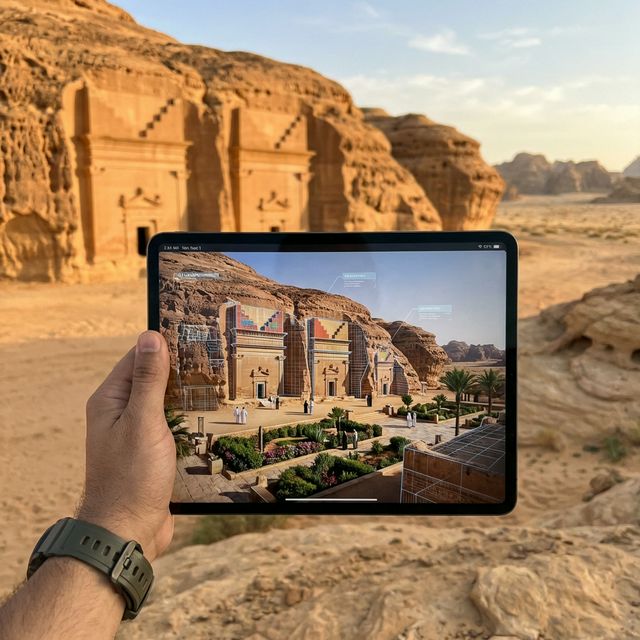
With a shared BIM model, architects, structural engineers, MEP consultants, and conservation specialists can all work from the same source of truth, reducing conflicts and miscommunication.
The Growing Role of BIM in GCC Heritage
Across the GCC, governments are increasingly recognizing the value of digital preservation. National heritage authorities are mandating BIM workflows for restoration and conservation projects. As urban development accelerates around historic districts, the demand for precise, model-based documentation continues to grow.
For BIM service providers, heritage projects represent some of the most technically demanding and rewarding work in the industry. They require a combination of advanced scanning expertise, deep knowledge of architectural modeling, and a sensitive understanding of conservation principles — a combination that only experienced teams can deliver.
Key Takeaway: BIM and Scan-to-BIM are not just about creating 3D models. For heritage projects, they are about creating an intelligent, shareable digital record that protects the past while enabling informed decisions about the future.
Leave a Reply