
For developers and asset owners in the GCC, the adoption of Building Information Modeling (BIM) is no longer just a technical requirement—it is a financial strategy. Beyond 3D visualization, BIM provides a data-driven framework that directly impacts the bottom line, delivering measurable returns on investment (ROI) from design through to facility management.
Quantifying the Value of BIM
The question “How much does BIM save?” is common, but the answer requires looking at multiple phases of the project lifecycle. While the initial investment in BIM implementation (software, training, and standards) is significant, the downstream savings consistently outweigh these costs by a factor of 5:1 or more on complex projects.

Reduced Rework Costs
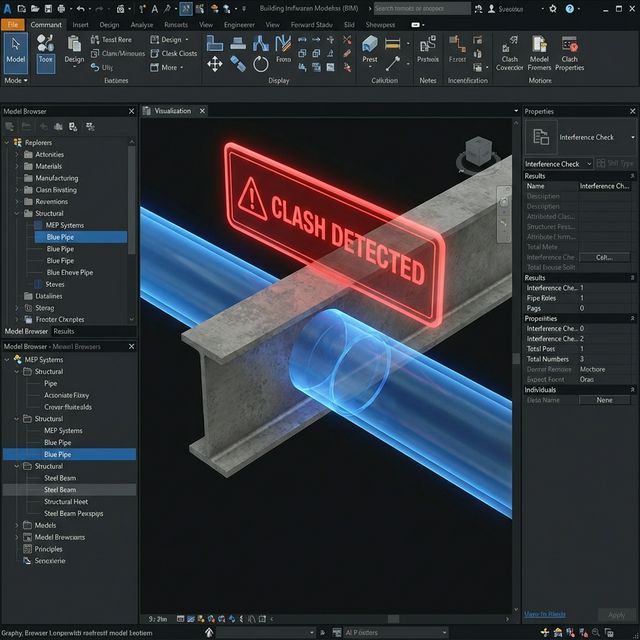
Clash detection during the design phase eliminates 70-90% of on-site conflicts. Resolving a clash digitally costs pennies; resolving it on site costs thousands in materials and labor delay.
Accurate Quantity Take-offs
Automated schedules from the BIM model reduce estimation variance to less than 3%, ensuring smarter procurement and minimizing material waste.
Long-Term Operational Savings
The biggest ROI opportunity lies in Facility Management (FM). Construction accounts for only 20% of a building’s total lifecycle cost; the remaining 80% is operations. A data-rich “Digital Twin” handover allows facility managers to access asset data, maintenance history, and warranty information instantly, reducing maintenance troubleshooting time by up to 30%.
The Bottom Line: BIM is an investment in certainty. It replaces assumptions with data, reducing risk and ensuring that capital projects in the GCC are delivered on time and within budget.
Leave a Reply